
By Hassan Yehia, founder of Clawser
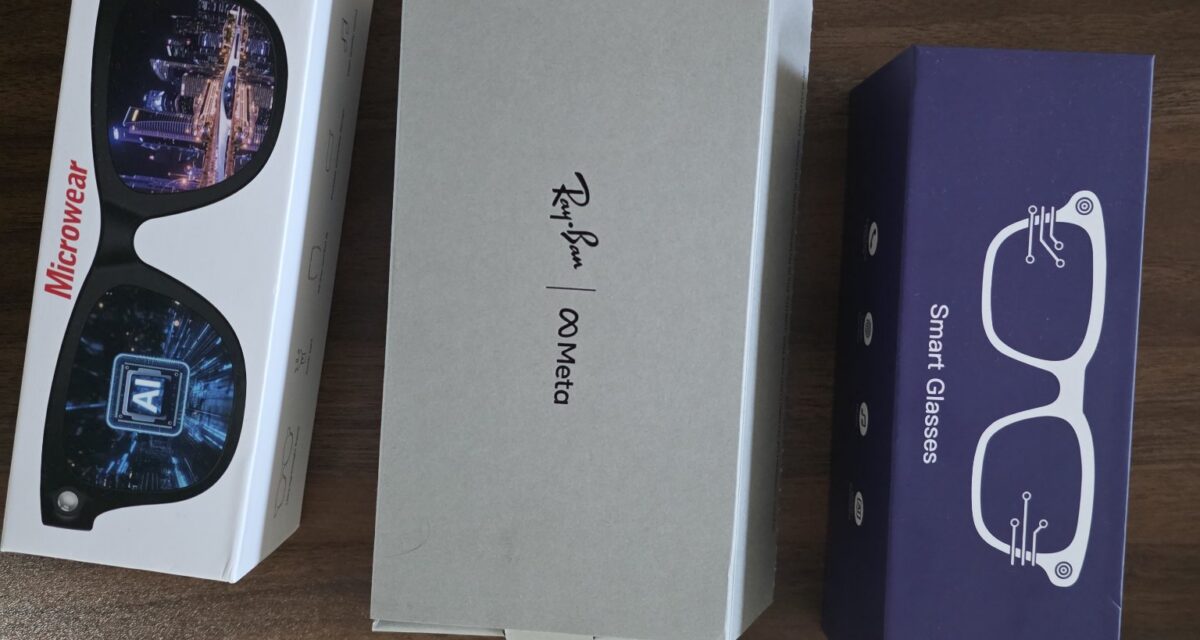
Three pairs of AI glasses sat on my desk this week. Two cheap ones, the kind flooding online stores right now, and the Ray-Ban Meta. I spent the day in the Meta pair, four to five hours of real use, and I tested the other two against it. I am a journalist, not an influencer, and I bought these with my own money. Here is what the reviews are missing.
Everyone reviews the assistant. Almost nobody reviews the voice.
The two cheap glasses first, because they teach you what to look for. They have cameras. They have some processing power. To be fair, their translation works. But ask the AI inside them a simple question, which model are you, and it refuses to answer. There is no way to see where your voice goes to be processed. The makers say it stays on your phone and nothing is saved, but there is no way for you to check that claim, and a privacy claim you cannot verify is marketing, not privacy. They also control nothing on your phone. Take the word AI off the box and you are wearing a headset with a camera pointed at everyone around you. That is the worst combination on the market: maximum exposure, zero transparency.
The Ray-Ban Meta is a different failure, and it is more interesting. The assistant, Meta AI, is the weak layer. In English it is good, genuinely. In Arabic it falls apart. It does not understand Arabic well and it does not understand names well. Mention a name any Arabic speaker knows, like Kadim Al Sahir, and you are talking to a wall. It interrupts you. It repeats your question back at you. Sometimes it simply misses what you want and closes the conversation. As an assistant, it is replaceable, and one day it will be replaced.
But underneath it sits the thing nobody is talking about: Meta’s voice processing. Hearing you in a real room, separating your voice, turning speech into understanding fast enough that conversation feels natural. That layer is among the most advanced I have ever used, and it is more important than the assistant riding on top of it. Assistants are software. They get swapped. The voice layer is the hard, physical, years deep work, and Meta did it brilliantly.
Do not take my word for it. Try it yourself. Record a voice message and lift your finger off the button. The transcript is already done and sent before you have time to look for the processing. That missing pause is the engineering nobody writes about.
The real limitation is different. These are smart glasses, but they are not a smartphone, and they do not work closely enough with the phone in your pocket. My own working assistant, the one that runs my company with me, cannot live on them. The glasses stay inside Meta’s wall. Until that wall opens, the best voice hardware in the world is answering to an assistant I did not choose.
Which is why my own prescription pair, on its way to me now, is the Audio model, the one with no camera. A camera on your face records everyone else. A voice in your ear helps only you. I can do everything I need with these glasses by talking, and nobody around me pays for it with their privacy.
My verdict after a day of testing: judge AI glasses by the voice, not the assistant. The assistant will be replaced, by Meta or by someone better. The voice processing is the product. And the direction worth betting on is accessories that help us while we move through the world, not chips in our heads.